
Manufacturing inventory is more than one stock quantity. A manufacturer needs to know what raw materials are available, what production consumes, and how many finished goods are ready for sale.
The U.S. Census Bureau separates manufacturing inventory into materials and supplies, work in process, and finished goods. See the U.S. Census Bureau manufacturing inventory definitions.
Raw materials, work in process and finished goods
| Stage | Meaning | Example |
|---|---|---|
| Raw materials | Materials or components waiting for production. | Steel, fabric, chemicals or purchased parts. |
| Work in process | Items in production but not yet completed. | A partly assembled product. |
| Finished goods | Completed products ready for sale or shipment. | A manufactured item held for customers. |
IRS Publication 334 also identifies raw materials, work in process and finished products as inventory categories for manufacturers. Read IRS Publication 334.
Why manufacturers should track each inventory stage
Separating material and finished-product movements makes it easier to understand whether stock was purchased, consumed in production or created by manufacturing. This matters for businesses looking for manufacturing inventory software for small business and inventory software for small manufacturers.
Step 1: Create raw-material inventory records
Every controlled material should have a clear inventory record, unit and stock quantity. Purchases can increase raw-material stock as supplies arrive.

Step 2: Define material requirements
A recipe or bill of materials connects the finished product with the raw materials and quantities needed for production.

Read our Bill of Materials guide or visit Bill of Materials software.
Step 3: Check material availability
Compare available raw-material stock with production requirements before manufacturing begins. This can reveal shortages early.
Step 4: Record manufacturing
The manufacturing entry connects the production quantity with materials used and finished goods produced.

Step 5: Track production batches
Batch records provide production history and help users review a particular manufacturing transaction.
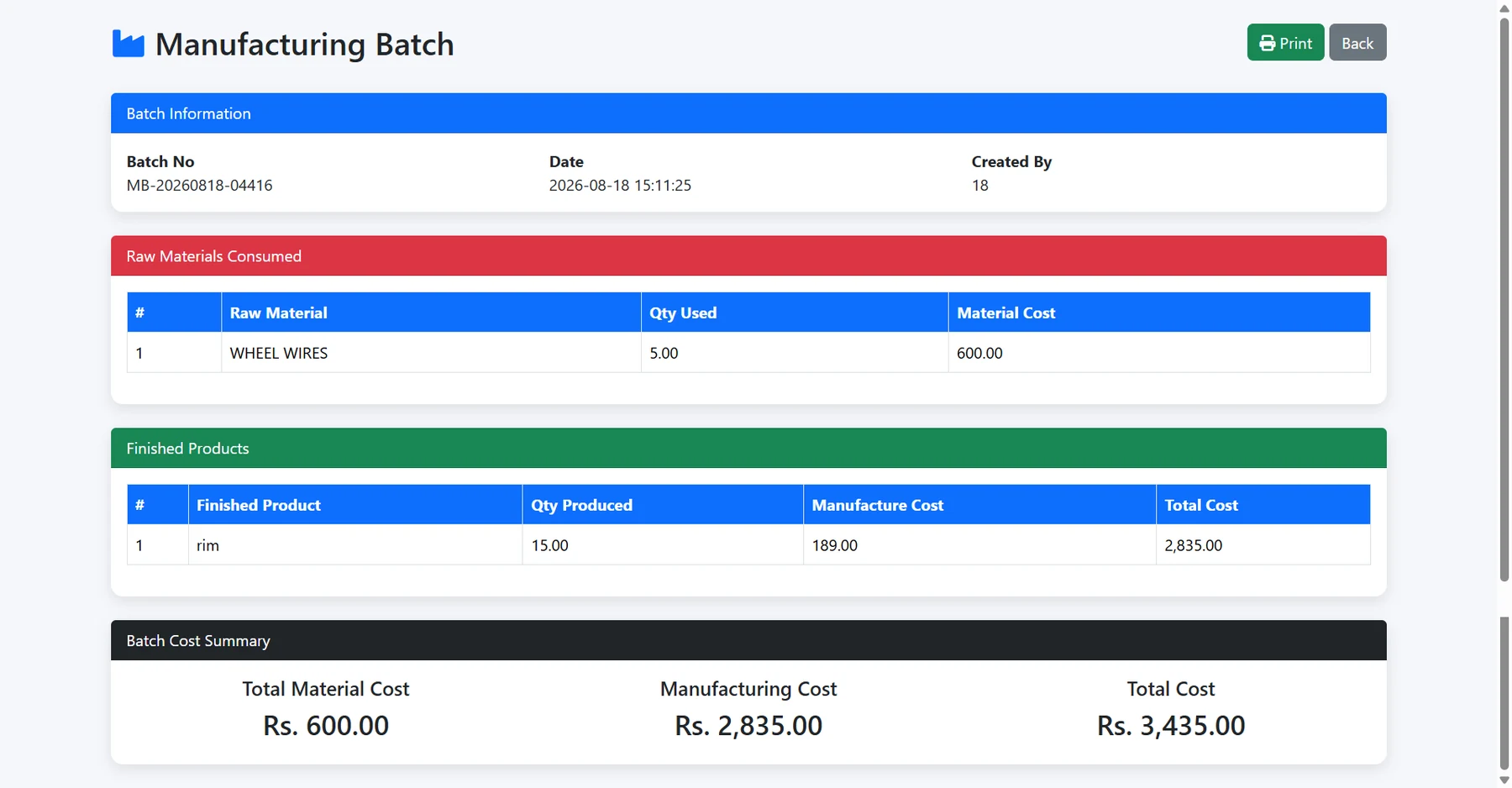
Step 6: Review finished-goods stock
After production is completed, the resulting product becomes finished-goods inventory. The business can review available finished quantities before fulfilling sales.
Example manufacturing inventory flow
- Purchase raw materials.
- Receive materials into stock.
- Use the BOM or recipe to determine requirements.
- Start a manufacturing batch.
- Record raw materials used.
- Record finished goods produced.
- Review remaining materials and finished goods.
- Reduce finished-goods inventory when products are sold.
Inventory records and manufacturing
IRS Publication 583 notes that for manufacturers or producers, inventory includes the cost of raw materials or parts purchased for manufacture into finished products. See IRS Publication 583.
What to look for in raw material inventory management software
- Separate raw-material and finished-product records
- Purchase-based stock increases
- BOM or recipe requirements
- Manufacturing entries
- Production batch history
- Current-stock and low-stock reporting
- Finished-goods sales deductions
- User permissions and auditability
A useful raw material inventory management software workflow should show what entered inventory, what production consumed and what production created.
Manufacturing inventory software for small businesses
Small manufacturers benefit from connecting raw materials, recipes, production batches, finished goods and reports. Explore our raw material inventory software page, inventory tracking guide, and inventory reporting guide.
Frequently asked questions
What is raw-material inventory?
Materials and components held for use in manufacturing before production consumes them.
What are finished goods?
Completed manufactured products ready for sale or shipment.
What is work in process?
Products that have entered manufacturing but are not yet complete.
Why use manufacturing inventory software?
It can connect purchasing, raw-material stock, BOMs, production batches, finished goods and reporting.
Conclusion
Accurate manufacturing inventory tracking follows materials through their lifecycle: raw materials enter stock, production consumes them, and completed products become finished goods. Connecting these stages gives small manufacturers a clearer picture of material availability, production and sellable stock.
Use a batch tracking system to connect recorded material consumption with finished output.