
Batch tracking identifies a specific group of products made during a production run and connects that group with manufacturing records. It gives a manufacturer more context than a total stock quantity alone.
FDA guidance defines a batch or lot as a specific quantity produced in a process or series of processes, and a batch or lot number as an identifier from which production and distribution history can be determined. FDA Q7A manufacturing guidance.
What is batch tracking in manufacturing inventory?
Batch tracking associates inventory with a batch identifier and production activity. Useful records include the finished product, batch number, production date, quantity and related manufacturing details.
| Batch information | Purpose |
|---|---|
| Batch/lot number | Distinguishes one production run. |
| Finished product | Shows which item was produced. |
| Production date | Places the batch in history. |
| Quantity | Shows how much was produced. |
| Recipe/materials | Connects production with inputs. |
Why batch tracking matters
Without batch-level records, users may know total finished stock but have less context about the production runs behind it. Manufacturing inventory software with batch tracking can keep production history connected with inventory.
Step 1: Define the recipe or BOM
Define the materials required for the finished product before production begins.

Read How Bill of Materials Works in Inventory and Manufacturing.
Step 2: Record the production run
The manufacturing entry records the product and quantity being produced.

Step 3: Use a batch identifier
A batch identifier should distinguish one production run from another. FDA Q7A guidance for covered API manufacturing calls for batch production records to use a unique batch or identification number. Requirements vary by industry and jurisdiction, but the traceability principle is useful more broadly.
Step 4: Review batch details
A batch-detail screen lets users inspect a specific production record rather than only aggregate stock totals.
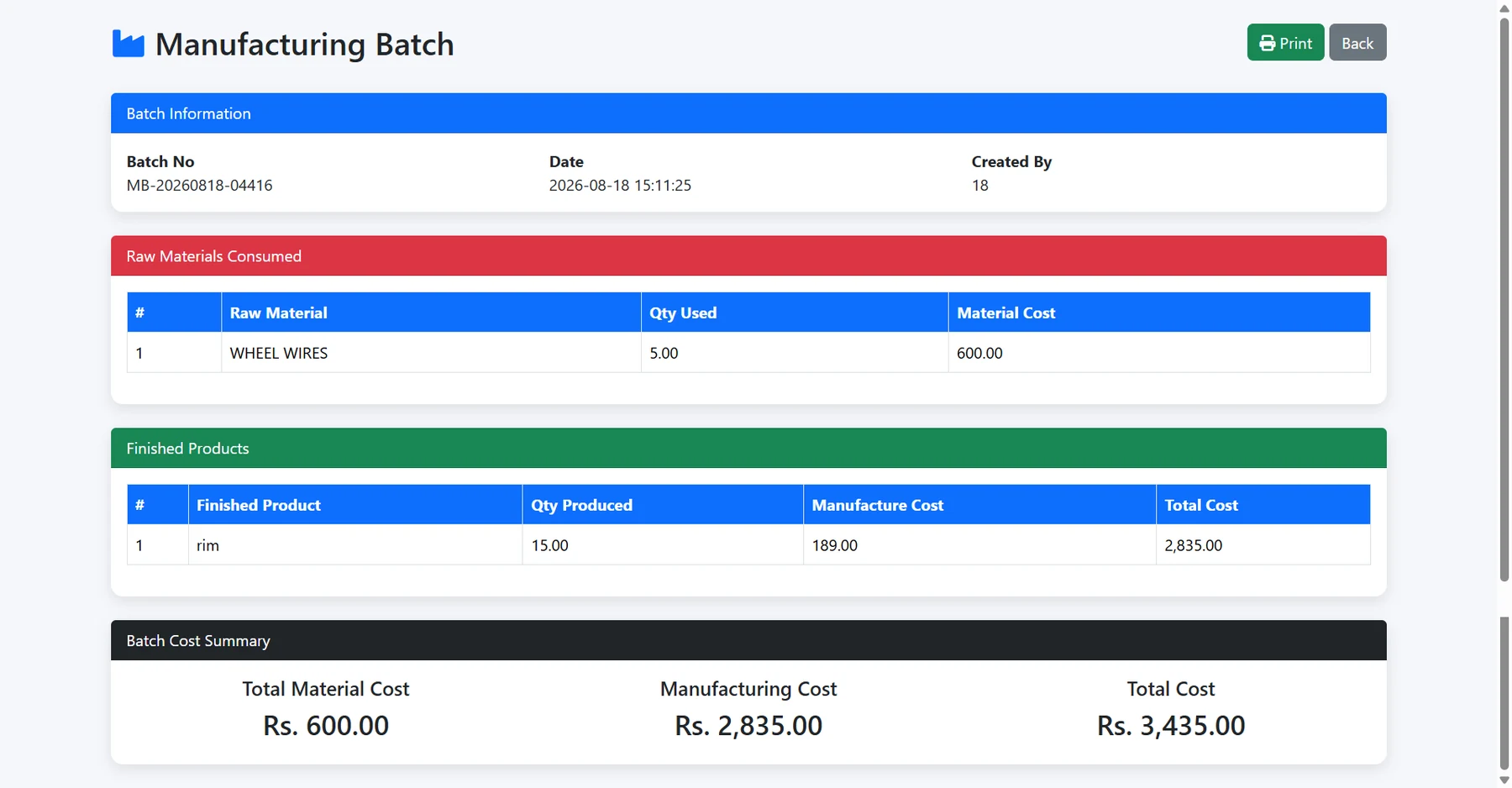
Step 5: Keep manufacturing history
Manufacturing history provides a chronological record of production and makes previous batches easier to locate.
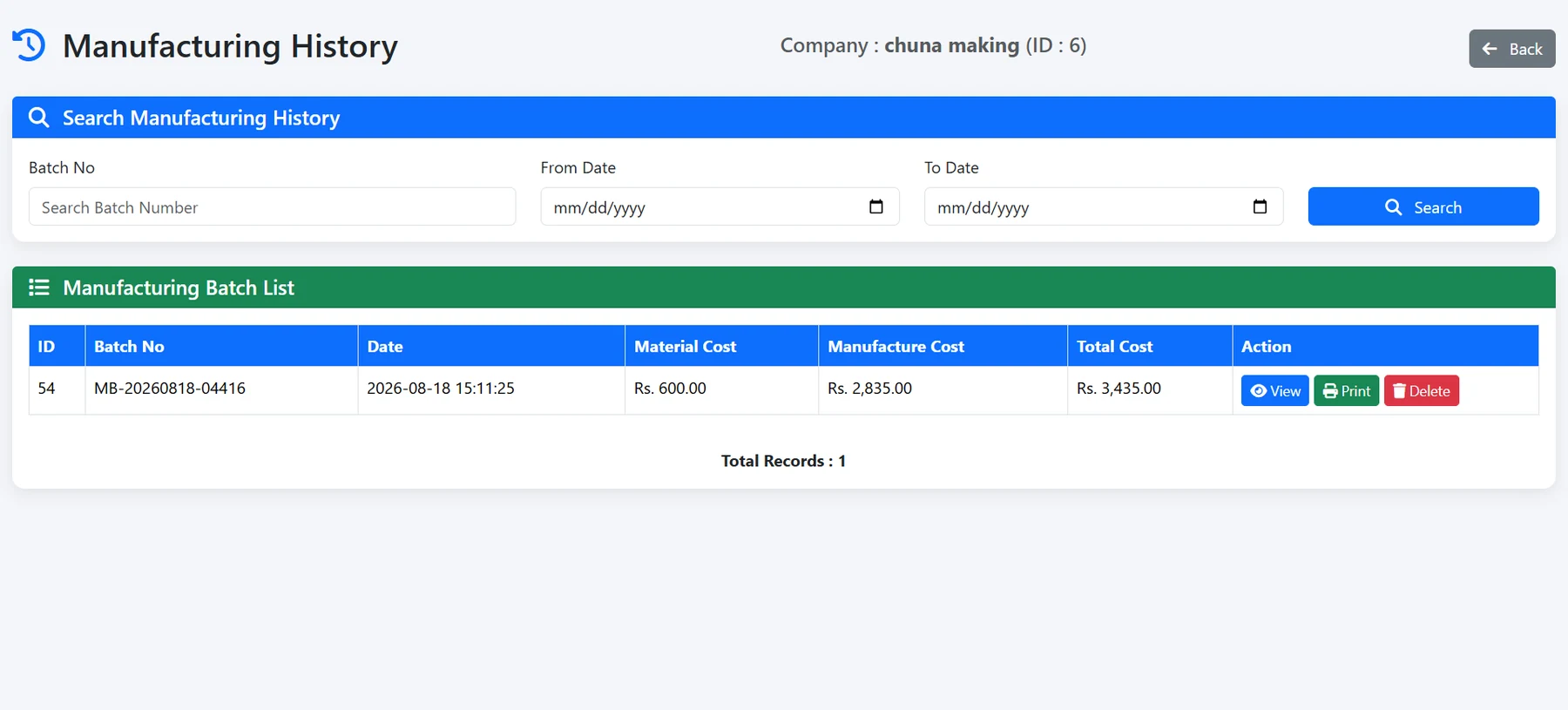
Batch tracking and traceability
FDA describes a traceability lot code as a descriptor, often alphanumeric, used to uniquely identify a traceability lot in the assigning firm’s records. FDA guidance on traceability lot codes. These food-specific requirements are not universal rules for every manufacturer, but they demonstrate the value of consistent lot identifiers and linked records.
Example batch-tracking workflow
- Create the finished product.
- Define its recipe or BOM.
- Check raw-material availability.
- Record manufacturing quantity.
- Use a production batch identifier.
- Review batch details.
- Record finished goods.
- Review manufacturing history.
What should batch inventory software provide?
- Unique batch references
- Finished-product identification
- Production dates and quantities
- BOM integration
- Batch details and history
- Finished-goods visibility
- User permissions and audit records
Batch inventory management software is most useful when batch records connect with raw materials, manufacturing and finished-goods stock.
Batch manufacturing software for small business
Batch manufacturing software for small business should make production records easier to follow without unnecessary complexity. Businesses may also search for production batch tracking software; the important question is whether the batch identifier stays connected to useful production and inventory information.
Read our raw materials and finished goods guide, or visit batch inventory software.
Frequently asked questions
What is a manufacturing batch?
A defined quantity produced during a particular production run and identified so its history can be distinguished.
What is the difference between a batch number and a product code?
A product code identifies the product type; a batch number distinguishes a specific production run.
Does every manufacturer need batch tracking?
Not necessarily. The need depends on products, industry, customers and applicable regulations.
Is batch tracking the same as serial-number tracking?
No. Batch tracking generally identifies a group of units, while serial-number tracking identifies individual units.
Conclusion
Batch tracking adds production context to inventory. Connecting a batch identifier with product, quantity, manufacturing details and history gives a small manufacturer a clearer production record.
Use raw materials inventory tracking to review the inputs consumed by each production batch.